The name, counted.
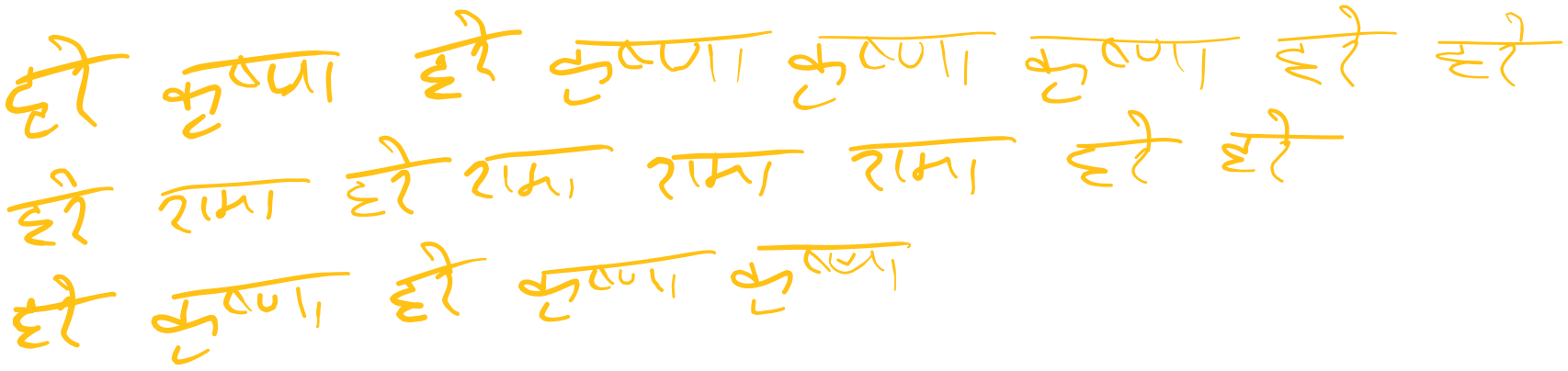
Hare Kṛṣṇa Hare Kṛṣṇa · Kṛṣṇa Kṛṣṇa Hare Hare Hare Rāma Hare Rāma · Rāma Rāma Hare Hare
108 beads — one mālā
16 mālās — a full round of the day
Why the name is counted
In the gurukul the day is bracketed by japa — the quiet repetition of the mahāmantra before study begins and after it ends. Turn the ring above at your own pace: one bead each cycle, one mālā every hundred and eight. The count is kept on this device alone.
The Bhāgavata returns again and again to a single practice: the audible remembrance of the name. It is offered not as one discipline among many but as the discipline suited to this age — available to the fasting sage and the distracted householder alike.
कलेर्दोषनिधे राजन्नस्ति ह्येको महान् गुणः।
कीर्तनादेव कृष्णस्य मुक्तसङ्गः परं व्रजेत्॥
This age is an ocean of faults, O King, yet it holds one great virtue: by the singing of Kṛṣṇa's name alone one is freed and reaches the highest state.
Bhāgavatam 12.3.51
एतन्निर्विद्यमानानामिच्छतामकुतोभयम्।
योगिनां नृप निर्णीतं हरेर्नामानुकीर्तनम्॥
For those who have renounced, for those still full of desire, and for the yogī without fear — the conclusion is the same: constant chanting of the name of Hari.
Bhāgavatam 2.1.11
शृण्वतां स्वकथाः कृष्णः पुण्यश्रवणकीर्तनः।
हृद्यन्तःस्थो ह्यभद्राणि विधुनोति सुहृत्सताम्॥
Kṛṣṇa, whose telling and hearing both purify, seats himself in the heart of the one who listens, and as a friend of the honest shakes loose everything inauspicious there.
Bhāgavatam 1.2.17
साङ्केत्यं पारिहास्यं वा स्तोभं हेलनमेव वा।
वैकुण्ठनामग्रहणमशेषाघहरं विदुः॥
Uttered as a sign, in jest, as a filler in song, or even carelessly — the taking of the name of Vaikuṇṭha is known to remove all fault.
Bhāgavatam 6.2.14
एवंव्रतः स्वप्रियनामकीर्त्या जातानुरागो द्रुतचित्त उच्चैः।
हसत्यथो रोदिति रौति गायत्युन्मादवन्नृत्यति लोकबाह्यः॥
Fixed in this vow, singing the name of the beloved, love arises and the heart melts; one laughs aloud, weeps, calls out, sings and dances as one mad — indifferent to the eyes of the world.
Bhāgavatam 11.2.40
एतावज्जन्मसाफल्यं देहिनामिह देहिषु।
प्राणैरर्थैर्धिया वाचा श्रेय एवाचरेत्सदा॥
A life is made fruitful only when breath, wealth, intellect and speech are turned, always, to the welfare of other beings.
Bhāgavatam 10.22.35
हरेर्नाम हरेर्नाम हरेर्नामैव केवलम्।
कलौ नास्त्येव नास्त्येव नास्त्येव गतिरन्यथा॥
Tulsīdās on the name
Six centuries later Tulsīdās set the same conviction in Awadhi verse, in a language the village could sing. The Mānasa is the gurukul's evening book: recited aloud, learnt by ear, carried out of the hall in the memory rather than the satchel.
कलिजुग केवल नाम अधारा।
सुमिरि सुमिरि नर उतरहिं पारा॥
In the age of Kali the name alone is the support; remembering it again and again, people cross to the far shore.
Rāmacharitamānasa · Uttarakāṇḍa
राम नाम मनिदीप धरु जीह देहरीं द्वार।
तुलसी भीतर बाहेरहुँ जौं चाहसि उजिआर॥
Set the jewel-lamp of Rāma's name on the threshold of the tongue, says Tulsī, if you would have light both within the house and without.
Rāmacharitamānasa · Bālakāṇḍa, dohā 21
भाय कुभाय अनख आलसहूँ।
नाम जपत मंगल दिसि दसहूँ॥
In love or in ill-will, in irritation or in idleness — where the name is repeated, there is auspiciousness in all ten directions.
Rāmacharitamānasa · Bālakāṇḍa
नाम प्रभाउ जान सिव नीको।
कालकूट फलु दीन्ह अमी को॥
Śiva knows well the power of the name: for him the deadliest poison bore the fruit of nectar.
Rāmacharitamānasa · Bālakāṇḍa
एहि कलिकाल न साधन दूजा।
जोग जग्य जप तप ब्रत पूजा॥
In this age of Kali there is no second means — not yoga, sacrifice, austerity, vow or rite — that stands beside it.
Rāmacharitamānasa · Uttarakāṇḍa
मंगल भवन अमंगल हारी।
द्रवउ सो दसरथ अजिर बिहारी॥
Abode of all good, remover of all ill — may he who played in Daśaratha's courtyard be moved to grace.
Rāmacharitamānasa · Bālakāṇḍa
The count is yours; the campus is ours together.
Every gurukul we build begins its morning exactly this way. If the practice means something to you, help us give a hall to the students who will keep it.